
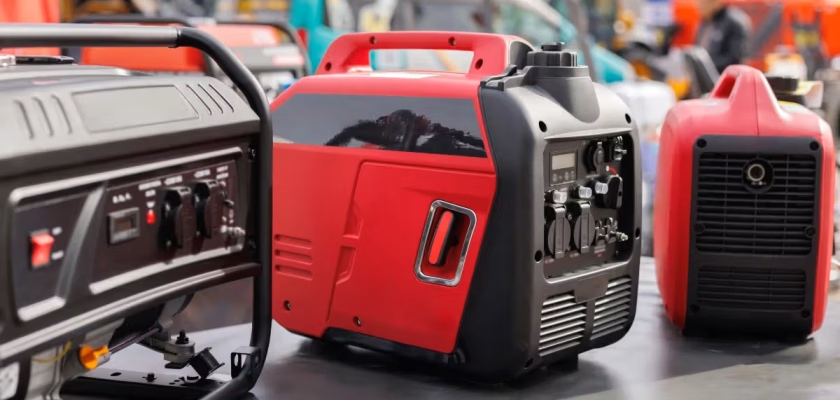
Finding the right generator for a peaceful camping trip can make all the difference between a relaxing getaway and a restless night under the stars. Family camping should be about reconnecting, not competing with the roar of an engine. That’s why quiet generators have become an essential part of modern outdoor adventures. Whether you’re running a few lights, charging devices, or powering an RV’s small appliances, the goal is to have enough energy without disturbing the tranquility of the wilderness, or your sleeping kids.
I’ve spent many camping trips testing and listening to different generators, comparing their sound levels, fuel efficiency, and portability. Through trial, patience, and the occasional frustrated sigh, I’ve learned which models are reliable, whisper-quiet, and truly worth carrying along.
Below is a detailed look at what makes a generator ideal for family camping, followed by a breakdown of some of the best models available today.
Why Noise Level Matters So Much
Camping is meant to be peaceful, with the sounds of nature filling the air. The last thing anyone wants is the droning hum of an engine echoing through the campsite. A noisy generator doesn’t just disturb your own group, it can ruin the serenity for nearby campers as well.
The decibel level of a generator is one of the first things I check. A typical conversation is around 60 decibels, so anything near or below that level is considered quiet. Many modern inverter generators are designed to stay within that range, especially at low loads. These models adjust engine speed automatically to match power demands, reducing both noise and fuel consumption.
For families, quiet generators also make nighttime more comfortable. Kids and light sleepers can rest easier when the hum is gentle and distant rather than harsh and jarring. It’s a simple factor that goes a long way in maintaining the calm atmosphere that camping is all about.
Power Needs For Family Camping
A quiet generator still has to meet the practical demands of family life outdoors. Between cooking equipment, fans, charging phones, and powering a small refrigerator, you’ll likely need between 1500 and 3000 watts for comfort without excess.
The best approach is to list all the devices you expect to use and note their wattage. A coffee maker might use 600 to 1000 watts, a small fridge around 500, and phone chargers barely 10. Adding these up helps determine the generator size that fits your needs without going overboard. A unit that can handle about 2500 watts typically covers most family setups comfortably.
It’s also worth considering how you’ll use your generator. If you’ll be powering your RV air conditioner, you’ll need more output, closer to 3000 or even 4000 watts. But if your goal is simply to charge gadgets and run a few small items, a 2000-watt inverter generator is usually sufficient.
Features That Make Camping Generators Family-Friendly
Beyond quiet operation and power, a good camping generator should be easy to handle, safe, and efficient. Portability is key; lugging a heavy machine across a campsite can turn a relaxing trip into a chore. Many of today’s models come with built-in handles or wheels to make transport easier.
Fuel efficiency is another big factor. A generator that can run for 8 to 10 hours on a single tank lets you sleep through the night without worrying about refueling. Inverter generators excel here, often adjusting their output automatically based on demand.
Safety features should never be overlooked either. Look for carbon monoxide sensors and automatic shut-off functions that prevent dangerous fumes from building up in enclosed or semi-enclosed spaces. Many modern units include CO detection systems that cut power if levels get too high.
Lastly, parallel capability is a convenient feature. It allows you to connect two generators of the same model for extra power when needed, handy if your camping needs grow or if you travel with another family.
Honda EU2200i – Reliable and Whisper-Quiet
The Honda EU2200i is one of the most popular generators among campers for good reason. It’s powerful enough to handle small appliances and sensitive electronics while remaining impressively quiet. Producing between 48 and 57 decibels, it’s quieter than a normal conversation, making it perfect for peaceful family trips.
At 2200 watts, it has enough capacity for lights, phone chargers, and even a small refrigerator. What I like most is its smooth power output, thanks to inverter technology, it’s safe for laptops, tablets, and other delicate devices.
Fuel efficiency is another highlight. On a full tank, the Honda EU2200i can run up to 8 hours depending on load. It’s also lightweight at around 47 pounds, so carrying it from the car to the tent site doesn’t feel like a workout. It may not be the cheapest option, but the reliability and quiet operation easily justify the cost.
Yamaha EF2200iS – Compact And Efficient
The Yamaha EF2200iS has earned a reputation for being both powerful and convenient. Its 2200-watt output covers the essentials for most families, and the noise level stays around 57 decibels. It’s built with a rugged design, and the rubber isolation feet help minimize vibration noise even further.
What stands out is its Smart Throttle feature, which automatically adjusts engine speed according to load. That means if you’re only running a few lights or a phone charger, the generator quiets down even more while conserving fuel. It can operate for up to 10 hours on a single tank at a quarter load, making it one of the most efficient units in its class.
It also includes a fuel gauge and an easy-to-read control panel, which simplifies operation, especially handy during those early morning starts or late-night power checks. Yamaha’s build quality and durability have long been trusted in the outdoor world, and this model continues that legacy.
WEN 56235i – Affordable And Lightweight
If you’re looking for a budget-friendly yet quiet generator, the WEN 56235i is worth considering. It offers 2350 surge watts and 1900 running watts, perfect for small families or solo campers who still want a peaceful environment.
One of the best features is its ultra-quiet 51-decibel operation, comparable to a soft conversation. Despite its compact size, it can power small kitchen appliances, lights, and electronics without strain.
It’s also incredibly lightweight, just 39 pounds, making it easy to carry to remote campsites. The fuel efficiency is solid, with up to 7 hours of run time on a single gallon. WEN’s eco-mode allows the engine to automatically adjust its fuel consumption, which helps stretch each tank even further.
While it may not have the premium feel of a Honda or Yamaha, it delivers excellent performance for its price and remains one of the best options for budget-conscious families who prioritize quiet and simplicity.
Westinghouse iGen2200 – Dependable For Family Use
The Westinghouse iGen2200 strikes a great balance between affordability, quietness, and reliability. It’s rated at 1800 running watts and 2200 peak watts, ideal for powering lights, charging electronics, and keeping a portable cooler running.
At 52 decibels, it operates quietly enough for late-night use without disturbing nearby campers. Its fuel efficiency is impressive, providing up to 12 hours of runtime on a 1.2-gallon tank, depending on the load. That’s more than enough to last through the night without refilling.
I also appreciate its lightweight frame, weighing about 46 pounds, and the convenient handle design. The iGen2200 includes multiple USB ports and standard outlets, so charging multiple devices simultaneously is effortless. It’s parallel-ready as well, meaning you can link two units for additional power if needed.
Westinghouse’s reputation for reliability makes this a smart option for families who want dependable performance without paying a premium.
Champion 2500-Watt Inverter Generator – Small Yet Capable
Champion has made a name for itself in the camping community with dependable, reasonably priced generators. The 2500-watt inverter model is especially popular because of its balance between power, portability, and noise level.
It runs at around 53 decibels from 23 feet, which is quiet enough for family campsites. The generator provides 1850 running watts and can power essentials like lights, fans, and small appliances effortlessly.
Fuel efficiency is strong, offering up to 11 hours of runtime on a 1.1-gallon tank at a quarter load. I also like its lightweight design, just 39 pounds, and easy start-up system, which makes operation straightforward even for those who aren’t mechanically inclined.
Champion also includes an optional parallel kit, giving you flexibility to double your power when camping with larger groups. It’s a dependable, no-fuss option that delivers steady performance without disturbing your peace.
EcoFlow Delta 2 – A Battery-Powered Alternative
For those who prefer to skip gasoline altogether, the EcoFlow Delta 2 offers a clean, silent, and eco-friendly solution. This portable power station runs entirely on battery and can be charged through solar panels, wall outlets, or a car port.
Since it’s battery-operated, it produces zero noise and no emissions, ideal for families who want absolute quiet. With a capacity of over 1000 watt-hours, it can power small appliances, lights, and electronics throughout the day.
The Delta 2 charges incredibly fast, reaching 80 percent in about 50 minutes through AC power. Its modular design also allows expansion with additional batteries for longer trips. While it doesn’t have the continuous power output of a gas generator, its convenience, silence, and sustainability make it an appealing option for tech-savvy campers.
It’s especially useful in campgrounds that restrict gas-powered generators or in situations where you simply want to enjoy nature without the smell of exhaust or the sound of an engine.
Maintenance And Care For Long-Term Use
Even the quietest and most efficient generator won’t last long without proper maintenance. Regular oil changes, air filter cleaning, and fuel management are vital to keep your machine running smoothly. Always use clean fuel and store your generator properly after each trip to avoid clogging or corrosion.
For battery-powered units like the EcoFlow, maintenance mostly involves keeping batteries charged and avoiding long periods of disuse. For gas-powered models, it’s wise to run the engine periodically during the off-season to keep it in working order.
Checking spark plugs, fuel lines, and venting systems also helps prevent surprises on the road. It’s a small investment of time that ensures your generator will be ready every time you pack up for another family adventure.
Tips For Using Generators Quietly And Safely
Even quiet generators can be used more discreetly with a few smart practices. Placing your generator on soft ground or a rubber mat can significantly reduce vibration noise. Position it as far away from sleeping areas as possible and direct the exhaust away from tents or RV doors.
Running the generator only when necessary helps conserve fuel and maintain the calm environment everyone enjoys. During early mornings or late nights, rely on stored power banks for light devices instead of running the generator continuously.
Safety-wise, always ensure proper ventilation. Never operate a generator inside a tent, RV, or enclosed shelter. Carbon monoxide is odorless and dangerous, so outdoor placement with good airflow is non-negotiable.
Conclusion
Family camping should be about laughter, stories by the fire, and restful nights, not the constant drone of a loud engine. The best generators for quiet family camping combine low noise levels with strong performance, fuel efficiency, and user-friendly design.
Models like the Honda EU2200i and Yamaha EF2200iS remain top choices for those who value dependability and silence. The WEN 56235i and Westinghouse iGen2200 offer budget-friendly options without sacrificing peace of mind, while the Champion 2500 delivers solid middle-ground performance. For a completely silent and eco-conscious solution, the EcoFlow Delta 2 brings the future of camping power to life.
Selecting the right generator depends on your family’s needs, but one truth stays constant: quiet power enhances every outdoor experience. It lets nature’s soundtrack shine, keeps everyone comfortable, and ensures that each trip into the wild feels just as calm as it should.


